
What a Bandicoot Taught Me About Slowing Down
How spending time outdoors can help calm your nervous system and restore perspective

A few weeks ago, I found myself standing in the backyard staring at a hole.
Not just any hole.
One of dozens of mysterious little holes that had been appearing throughout our lawn for months.
Every few days I'd walk outside and discover another patch of freshly dug earth. Some holes were shallow, some were surprisingly deep and others appeared in clusters as though whatever was responsible had invited all its friends over for a digging party.
As someone who is naturally curious, this quickly became a minor obsession.
I would sneak outside at night with a torch hoping to catch the culprit in the act. I'd hear rustling in the darkness and convince myself I was getting closer to solving the mystery, only for the little digger to disappear before I could get a proper look.
Eventually my family bought me a trail camera for Mother's Day, partly because they knew I'd enjoy it and partly because they were probably tired of hearing me talk about the mystery holes.

A few weeks later, the answer finally appeared.
Bandicoots.
Several of them.
Busy little creatures wandering through the backyard each night digging for food and apparently redecorating my lawn while they were at it.

The amount of joy this discovery brought me was probably disproportionate to the situation.
But that's the thing about nature. It has a way of drawing us out of ourselves.
It invites curiosity. Wonder. Attention.
And perhaps most importantly, it gives our busy minds something different to focus on for a little while.
As a psychologist, I spend much of my time helping people navigate stress, anxiety, overwhelm and burnout. Many of the women I work with are juggling careers, families, ageing parents, household responsibilities and endless mental to-do lists. Their days are full and their minds are even fuller and one of the recommendations I find myself returning to over and over again is surprisingly simple.
Spending more time in nature.
Not because nature magically solves life's problems, it doesn't.
The bills still need paying. The washing still needs folding. The inbox still fills itself while you're not looking.
Yet time and time again, I see how even a few minutes outdoors can help people feel calmer, clearer and more connected to themselves and I've noticed exactly the same thing in my own life.
We Live in a Very Noisy World
Modern life is loud. Not always in volume, but certainly in demands.
Before we've even climbed out of bed, many of us have already checked our phones. We know what's happening in the news, we've seen messages from friends, we've looked at our calendar and we've mentally started planning the day ahead.
Then the day begins properly.
Emails arrive.
Notifications flash.
Phones ring.
Children need things.
Partners need things.
Work needs things.
The cat wants feeding.
The groceries need organising.
Someone has forgotten something important.
And somewhere in amongst all of that, we're supposed to find time to look after ourselves too.
It's little wonder that so many people feel mentally exhausted.
Our attention is constantly being pulled in different directions.
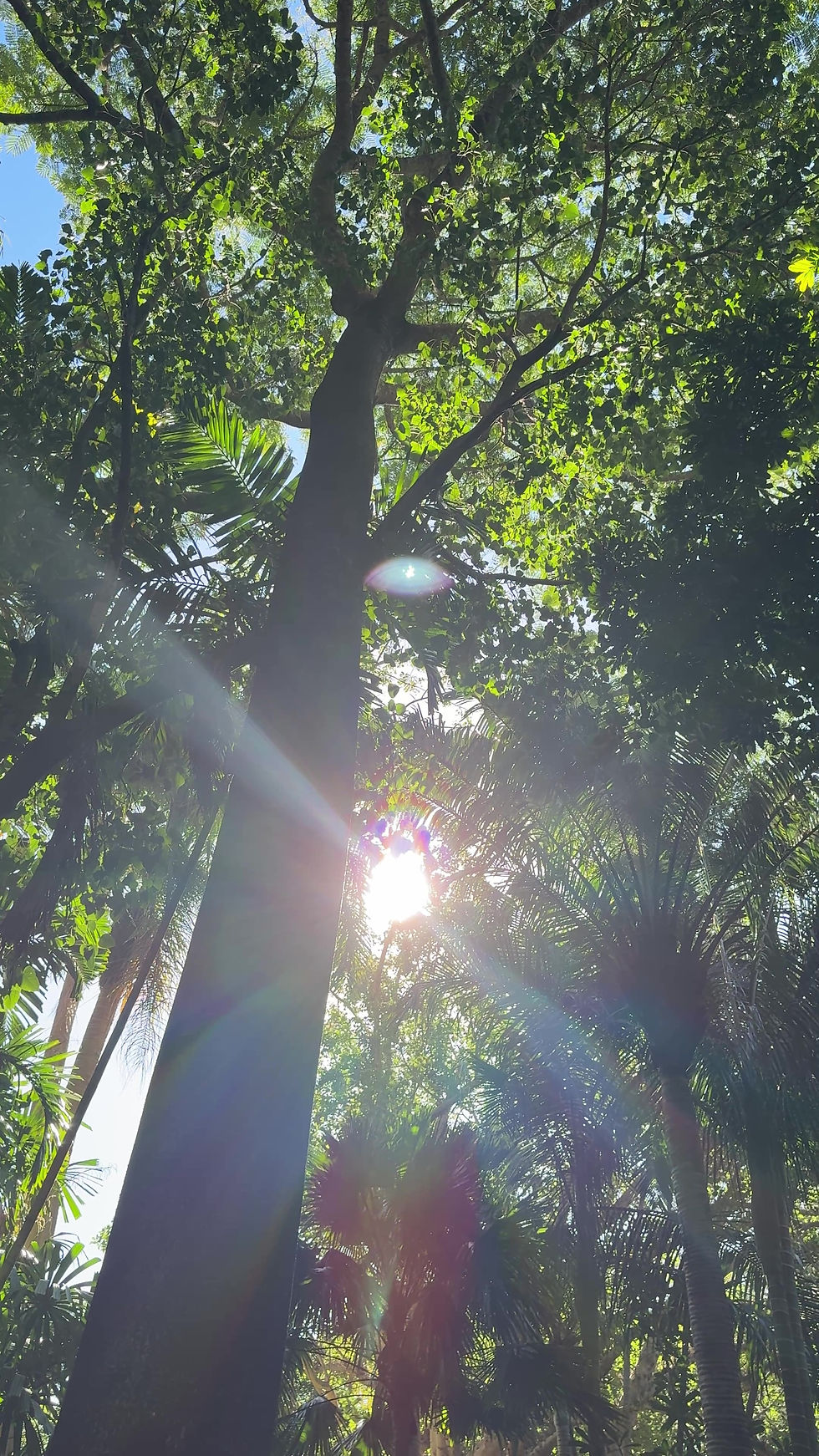
Nature offers something very different.
The trees don't need anything from us.
The birds aren't expecting a reply.
The ocean doesn't care how productive we've been.
The flowers aren't judging us for leaving the washing unfolded.
For a little while, we can step outside the constant cycle of doing and simply exist.
And there is something deeply restorative about that.
Nature Brings Us Back to the Present
One of the reasons nature feels so calming is that it naturally captures our attention.
When you're walking through a garden, sitting beside the ocean or watching sunlight move through the trees, your senses become engaged without you having to make much effort.
You notice the colours.
The movement.
The smell of rain in the air.
The warmth of sunshine on your skin.
The sound of birds calling from somewhere nearby.
Without even realising it, your attention begins shifting away from worries about tomorrow and regrets about yesterday.
You become anchored in what is happening right now.

Psychologists often talk about mindfulness as a powerful tool for reducing stress and improving wellbeing. The challenge is that many people hear the word mindfulness and immediately imagine sitting cross-legged on a cushion trying very hard not to think. I don;t know about you but I find it nearly impossible.
But nature offers a gentler version. It's mindfulness without trying, the present moment comes to you. You don't have to go searching for it.
Not All Rest Leaves Us Feeling Rested
One thing I've noticed over the years is that not all forms of rest are created equal.
Think about the last time you spent an evening scrolling social media.
Perhaps you sat down intending to check one thing and somehow emerged hours later wondering where the evening had gone.
Or maybe you've finished an entire television series in a single weekend and found yourself feeling strangely tired and in a daze afterwards.
Now compare that to the last time you sat on a beach listening to waves roll in.
Or walked beneath a canopy of trees.
Both might technically be rest but they feel very different.
Now don't get me wrong. I enjoy the occasional binge-watch as much as anyone but afterwards I often feel a bit like a stunned mullet. My brain feels cluttered, I've lost track of time and it takes me a little while to remember what day it is.
Whereas I have notice that for me and others I have spoken with nature tends to have the opposite effect. When I spend time outdoors, I usually come back feeling clearer, lighter and more grounded.
It's as though the mental clutter settles to the bottom and everything becomes easier to see.
The problems haven't disappeared.
But I feel more capable of dealing with them.

When Your Nervous System Finally Gets a Chance to Exhale
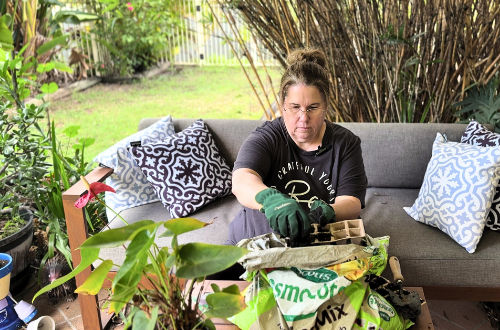
There have been plenty of afternoons when I've finished work feeling mentally scattered, with my head full of unfinished tasks, client notes, phone calls I need to make, and all the other little things that come with being an adult. On those days, I often wander outside and simply spend a few quiet moments in the garden. I might check on the vegetables, see what's flowering, or inspect the latest bandicoot excavation project.
Nothing dramatic happens. There are no life-changing revelations or magical moments. Yet by the time I come back inside, something has shifted. My shoulders have dropped, my breathing has slowed, and the urgency that I carried outside with me has softened.
Nature has a gentle way of inviting our nervous system out of constant alert mode. Instead of scanning for problems, we begin noticing the birdsong, the breeze, the warmth of the sunshine, or the scent of freshly cut grass. Without us even realising it, our body starts receiving a message that modern life rarely gives it: For this moment, you are safe.
The Gift of Space
One of the things I love most about nature is the space it creates. Not silence exactly, but space to think, to breathe and to simply notice what's around us. Some of my best ideas haven't arrived while sitting in front of a computer screen. They've appeared while gardening, walking, watching the rain, or sitting outside with a cup of tea.
Now, if I'm being completely honest, a surprising number have also arrived while sitting on the toilet. It remains one of the few places in the house where nobody expects anything from me for five uninterrupted minutes!
But I think that's actually the point. Insight rarely appears when we're forcing it. It tends to arrive when we finally stop rushing, stop filling every spare moment with information, and give our minds the space to wander. Nature has a wonderful way of creating those opportunities, gently quieting the mental noise so we can hear our own thoughts again.

We Were Never Meant to Live Entirely Indoors
For most of human history, people lived much closer to nature than we do today. They understood the changing seasons, woke with the sunrise, noticed the weather, and spent far more time outdoors than under fluorescent lights or in front of computer screens.
Today, many of us experience life very differently. We wake up inside, work inside, exercise inside, relax inside, and then wonder why we feel disconnected, restless or mentally drained.
I sometimes think one of the reasons nature feels so restorative is because it reconnects us with something deeply familiar. Our minds and bodies still recognise the rhythm of birdsong, fresh air, sunlight and open spaces. Spending time in nature reminds us that we are part of the natural world, not separate from it.
Perhaps that's why so many people notice they feel calmer, clearer and more like themselves after spending time outdoors. Sometimes reconnecting with nature is also the first step towards reconnecting with ourselves.
Small Moments Matter
The good news is that you don't need a national park in your backyard to experience the benefits of nature. You don't need expensive equipment or to become an avid hiker. For me, nature needs to be simple, enjoyable and accessible, because most of its benefits come from the small moments woven throughout ordinary days.
It might be enjoying your morning coffee in the sunshine, taking a walk around the block, eating lunch outside, watching a sunset, listening to the rain on the roof, opening the curtains to let natural light fill the room, or simply standing beneath a tree for a few quiet minutes. These moments may seem insignificant on their own, but they have a way of adding up over time. More often than not, it's the small things we do consistently that have the greatest impact on our wellbeing.
Nature won't solve every problem, but it can help us slow down, calm our minds, gain perspective and reconnect with ourselves. It reminds us that life is about more than racing from one task to the next, ticking boxes and constantly thinking about what's coming next.
So the next time you're feeling overwhelmed, stressed or mentally exhausted, don't automatically reach for another screen. Instead, try stepping outside. Look up. Take a slow breath. Notice what's around you. You might be surprised by how just a few minutes in nature can help you feel calmer, clearer and a little more like yourself again.
If you'd like a little extra support creating a calmer, more intentional life, I'd love you to join my free 7 Days to a Calmer You Challenge. Each day you'll receive a simple email with practical strategies to calm your nervous system, reconnect with what matters most and create a little more breathing space in your life.
Until next time,
Pause. Breathe. Reconnect.
Liz
Written by Liz Anderson, Psychologist
Liz Anderson is a psychologist and author of Stop Rushing Start Living: A Psychologist's Guide to Slowing Down, Stressing Less and Calming the Mind. She helps busy midlife women reconnect with themselves after years of putting everyone else first, so they can create calmer, more meaningful lives without guilt.
If you found this helpful, visit www.slowdownwithliz.com for practical resources, blogs and tools to help you reconnect with yourself and create a life that feels true to who you are.


Comments